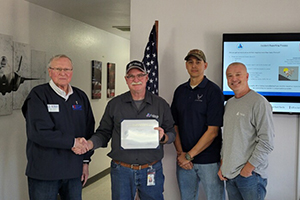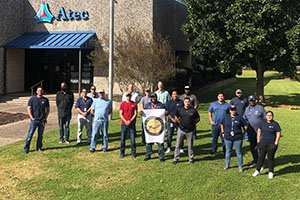
General Ben Robinson’s Journey from College Dropout to Air Force Pilot. His story and realization along the way that STEM education is needed to develop our future workforce. Learn how the Aerospace Education and Industry Partnership (AEIP) is making this possible. Click here to read the article. This article was provided to me by the Innovation Intake. To find out more information about STEM education visit Innovate+Educate. Use the STEM Directory to find an organization near you.
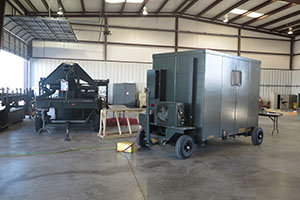
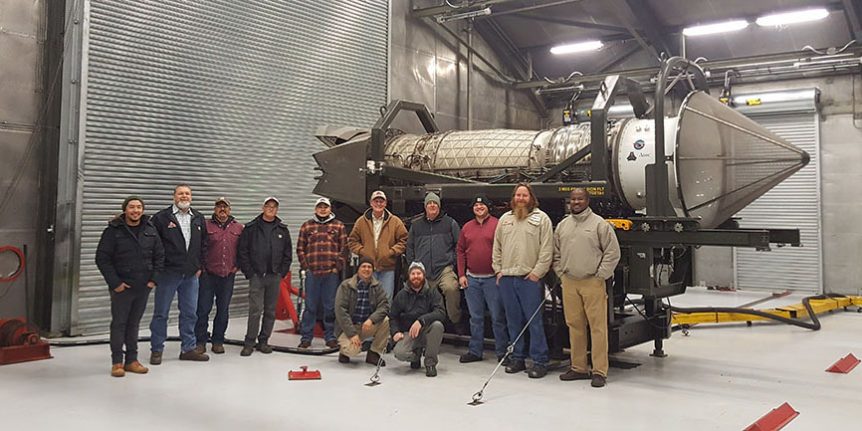
The article The Small Turbine Engine Test Cell, written by Tim Kern, featured the test cells at the Rolls Royce Indianapolis facility. Atec was pleased to see our “green,” Phoenix Modular Test Facilities displayed in the January 2012 edition of the Aircraft Maintenance Technology Magazine and on the AviationPros website.
Pratt & Whitney Rocketdyne’s Video of the 2011 Delta and Atlas Launches!
Enter the economy. The last few years have wreaked havoc with the aviation industry. Rising fuel costs have made it even more expensive to operate aircraft. Specific fuel consumption is now of paramount importance. Flight readiness of an aircraft—whether for private fleets, military, corporate or commercial air operators—is critical. If an aircraft is on the ground, it is not performing its mission or making money, plain and simple. The economics of maintenance have come under increased scrutiny for both the military and commercial sectors. “Give me the safest, most reliable engines you can for the least amount of money,” has become the standard for MRO. Enter the environment. By their nature, Engine Test Cells are not cut out to be nice, earth-friendly neighbors in the community. No one ever wakes up and says “Gee, I hope we get a turbine engine test cell built next to us, because that would sure help our property values increase.” Test Cells are smelly, dirty, noisy neighbors full of fuel, oil, and grease—commonly referred to as hydrocarbons—and they literally emit tons of combustion by-products into the air with every engine test. Enter the FAA and OSHA. Worldwide guidelines for aircraft safety and the health and safety of maintenance employees have also increased significantly over the past few decades. Fire systems are rarely simple, hand-held extinguishers anymore, for example, but are fully automated release systems that automatically notify the fire department. Fire retardant agents have become more expensive as the standard oxygen-depleting fire systems, like Halon, have been deemed environmentally unfriendly. Control rooms have to allow the personnel inside to carry on conversations to protect users from hearing loss. These are all good things, but they come with a price tag. Let’s go back to the economics for a minute. As a test cell, being a good neighbor costs money—lots of it. Acoustic treatments and environmental containment also drive a tremendous amount of cost into test cells. As we are all aware, any noisy activity, be it a rock concert or a NASCAR race, is always compared to the noise of a jet engine. Everyone is geared from birth to think of jet engines as the noisiest thing on the planet. Test Cells have migrated from outdoor operations to indoor, fully acoustic isolated structures. A new test cell to test the 100K+ thrust engines that power large commercial jet liners can now cost upwards of $40-50 million dollars. Building construction and acoustical measures account for over half the cost. Depending on location, another 10-15% of cost can be wrapped up in environmental containment and safety issues.
In the old days, your test cell had an engine mount, a few gauges, a few hoses and cables, a start system, a fuel system and a pad of paper, and you were ready to fire up. However, since the inception of powered flight, engine power and complexity have increased at an exponential rate, especially with the advent of the jet engine in the years after WWII, and then again with the introduction of digital controls.
Test Cells still have the same mission as they did with the Wright Brothers: verifying engine performance prior to flight. How that mission gets accomplished however is very different today. On one hand, you could argue from a safety and operational readiness standpoint that test cells should be your most appreciated asset, but, on the other you could say that Test Cells are the single biggest sunk cost for an MRO; they are pure overhead and a pain in the neck to maintain. So how does today’s Director of Maintenance balance their shop mission and engine test cell requirements, and incorporate all the latest gadgets to handle the ever increasing complexity of engines all on a slashed budget? Terms like sunk costs, fixed assets, contribution, tooling charges, consumables, re-test, qualifications, etc., have turned the operation into a full-on business enterprise. The challenges of Engine Test Cells for 2012 and beyond are balancing cost and schedule against capability, reliability and performance. The days of “the sky’s the limit”are past. Today’s MROs have to be both technically as well as business savvy. ***** The purpose of this post area is to discuss the challenges posed by the Test Cells of today and tomorrow in both generalities and in specific details. Please feel free to comment on our cover post or start your own thread regarding how you see the Challenges of Test Cells.
January 20, 2011 – Vandenberg Air Force Base – NROL 49 March 5, 2011 – Cape Canaveral – USA 226 (X-37B) Photo credit: Justin Ray/Spaceflight Now March 11, 2011 – Cape Canaveral – NROL 27 April 14, 2011 - Vandenberg Air Force Base – NROL 34 Photo credit: Pat Corkery/ULA May 7, 2011 – Cape Canaveral – SBIRS GEO-1 July 16, 2011 – Cape Canaveral – GPS 2F2 August 5, 2011 – Cape Canaveral – Juno Photo credit: Justin Ray/Spaceflight Now November 26, 2011 – Cape Canaveral – Curiosity ”Our only chance of long-term survival is not to remain lurking on planet Earth, but to spread out into space.” — Stephen Hawking, interview in the Winnipeg Free Press, 19 November 2011.
Atec’s 2011 launch schedule began with the maiden voyage of a Delta 4-Heavy rocket from California, the largest booster ever flown from the West Coast. The RL-10 engine upper stage deployed a crucial and clandestine replacement satellite into a polar orbit for the National Reconnaissance Office’s sophisticated constellation. The Latin words “melior diabolus quem scies” are inscribed on the mission patch. This roughly translates to mean “the devil you know,” as in the phrase “better the devil you know than the devil you don’t know.” Launch the article.
The first Atlas 5 launch of 2011 inserted the Pentagon’s second experimental X-37B, America’s miniature military space shuttle, into Earth’s orbit to begin a secretive long-endurance mission. On November 29, 2011, a spokesperson for the Secretary of the Air Force announced the mission was extended beyond its original life expectancy, citing ongoing experimentation. See launch photos.
Fast on the heels of the Atlas launch, a medium-class Delta 4 lifted off from the cape with another NRO spacecraft headed for a geosynchronous orbit 22,300 miles above the earth. This satellite will serve to relay data from low-altitude spacecraft such as imaging spy satellites. Read more about the mission and see photos.
Capping off six launches in seven months for the NRO, an Atlas 5 launched from the West Coast carrying a pair of formation-flying ocean surveillance spacecraft.
Details surrounding the purpose and final orbit of the satellite are classified, but the new spacecraft will definitely serve a role for the U.S. military. Read the full story and see photos.
Atlas 5 continued to perform flawlessly in 2011, launching the long-awaited next generation in early-warning missile detection satellites. SBIRS GEO-1 is the first of four spacecraft slated to replace the Defense Support Program satellites and is primarily intended to provide enhanced strategic missile and theater ballistic missile warning capabilities. See additional photos.
Launching from Florida, a Delta 4 lofted the second of a 12-ship advanced constellation of GPS satellites. The first of the GPS IIF series was launched May 27, 2010. Each of the 12 are expected to have a 12-year life span. The GPS IIF series continues the tradition of combined civil and military global positioning system satellite coverage. This was the 50th successful launch of a GPS craft by the Delta family dating to 1989. Watch the launch.
Atlas 5 launched a NASA probe destined for Jupiter, 1.8 billion miles away from Earth. After launch, the rocket’s Centaur upper stage, powered by an RL-10 engine, carried out a first six-minute burn to boost the spacecraft into a temporary orbit. A second, nine-minute RL-10 firing 31 minutes later accelerated Juno to 25,000 mph, the interplanetary escape velocity. Three minutes later, the 4-ton spacecraft separated from the Centaur to fly on its own. Read NASA’s updates on the mission.
Ending Atec’s launch year, an Atlas 5 propelled a probe form Earth that carries the most advanced roving vehicle ever sent to the surface of another planet. Destined for the Gale Crater on Mars, and carried by the Mars Science Laboratory, the car sized Curiosity will continue the work of previous Mars rovers in the search for life on our neighboring planet. Interestingly, the RL-10- engined upper stage performed so flawlessly on this launch that Louis D’Amario of NASA’s Jet Propulsion Laboratory in Pasadena said, “This was among the most accurate interplanetary injections ever.” Read more about the precise launch, the postponement of the planned course adjustment , and NASA’s updates on the mission.